
Hands-Free Shoes: Who Actually Benefits (and Who Doesn't)
Hands-free shoes are having a moment. Nearly every major brand now offers some version of a shoe you can step into without bending over, and the marketing tends to suggest everyone needs one. As a store that fits feet for a living, we'd like to offer a more honest take: hands-free shoes are genuinely life-changing for some people, pleasantly convenient for others, and unnecessary for plenty of folks. Here's how to tell which group you're in.
What the technology actually does
The concept is simple. A true hands-free shoe holds itself open so your foot can slide in, then secures around your heel without you touching it. In the Orthofeet hands-free line we carry, this works through a patented slip-on design — you adjust the laces once to your preferred snugness, and from then on you just step in. A patented heel piece springs back into place behind your heel and keeps the shoe on as you walk. No bending, no shoehorn, no crushing the back of the shoe and hoping for the best.
That last point matters more than it sounds. Most people who "slip on" regular sneakers do it by stomping down the heel counter, which permanently deforms the part of the shoe responsible for holding the foot stable. A real hands-free design gives you the convenience without destroying the shoe's structure.
The honest case for
Hands-free shoes earn their keep whenever bending over is difficult, painful, risky, or temporarily off the table. In practice, that covers more situations than you might think.
Arthritis in the hands or fingers can make tying laces genuinely frustrating, and arthritis in the knees or hips can make reaching your feet a daily ordeal. Chronic back pain puts every shoe-tying session on the negotiating table. For people with balance issues, the bigger concern isn't discomfort — it's that bending over and standing back up is a fall risk, and anything that removes that moment from the daily routine is a safety win, not just a convenience. This is why slip-on shoes for seniors have become one of the most common requests we hear in the store.
Then there are the temporary seasons of life. Late pregnancy, when your feet might as well be in another zip code. Recovery from hip or knee replacement, when your surgeon has explicitly told you not to bend past a certain point. Recovery from back surgery. In these cases a hands-free shoe isn't a gadget — it's a way to stay independent and follow doctor's orders at the same time. As always, your doctor or physical therapist is the right person to confirm what movements you should avoid; we can help with the footwear side once you know.
The honest case against
Now the other side. If you're a runner or an athlete who wants a truly locked-in, dialed-to-the-millimeter fit, traditional laces still do that job best. Laces let you fine-tune tension across five or six points of the foot; a step-in design trades some of that adjustability for convenience. Serious athletes usually shouldn't make that trade for training or competition.
People with very narrow feet can also struggle with hands-free designs, which tend to run roomy and are often built on wide and extra-wide lasts. If your feet swim in most shoes already, a step-in heel may not grip you securely enough.
And honestly? If you can bend over comfortably and don't mind tying your shoes, you don't need this technology. There's no hidden health benefit to hands-free entry itself. Buy the shoe that fits your foot and your life, whatever the closure looks like. Our full range is in men's and women's collections if you'd rather shop by fit than by feature.
Orthopedic hands-free vs. fashion hands-free
Here's the distinction the ads gloss over. A fashion brand's hands-free shoe solves one problem: entry. An orthopedic hands-free shoe solves entry and everything else an orthopedic shoe is supposed to solve.
Take the Orthofeet hands-free line we sell online. Beyond the step-in design, these shoes have the Ortho-Cushion™ system for shock absorption, stretch water-repellent uppers that adapt to bunions and hammertoes, a wide toe box, extra depth that accommodates orthotics, and wide and extra-wide widths. The line covers real life, too: stretch sneakers (Yari, Kita, Nira), leather sneakers (Navigate, Wander, Roam), waterproof boots (Dalton, Carmel), golf shoes (Birdie, Fairway), work boots (Graphite, Quartz), slippers (Vito, Lorin), and closed-toe sandals (Saturn, Venus). Many people who need hands-free entry also deal with conditions like plantar fasciitis, and it makes little sense to fix the bending problem while ignoring the support problem.
Getting the fit right
A few practical tips. Because you set the lace tension once, set it carefully — snug enough that your heel doesn't lift, loose enough that the top of your foot isn't under pressure. Try shoes on later in the day, when feet are at their largest. If you wear orthotics, bring them; a hands-free shoe with removable insoles and extra depth should fit your orthotic without cramping your toes. And walk in them — a proper step-in shoe should feel secure from the first stride, not after a break-in period.
If you're not sure whether hands-free is right for you, that's exactly what a fitting is for. Foot evaluations at Comfort Footworks are free, led by board-certified pedorthist Paul Henderson, who has spent more than 35 years fitting feet of every shape and situation. Find us at 924 Park Center Drive, Suite 101 in Matthews, call 704-846-0301, or stop in Monday through Friday 10–6 or Saturday 10–4. We'll give you a straight answer — even if that answer is that your current laces are doing just fine.
What we'd actually put you in
Roomy toe box, removable insole, no gimmicks. Screened by a pedorthist.
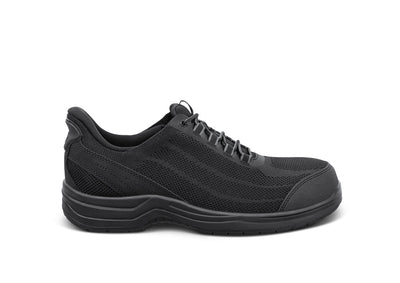 Orthofeet
Onyx Hands-Free Work Shoes (Men's)
$149.00
Orthofeet
Onyx Hands-Free Work Shoes (Men's)
$149.00
 Naot Footwear US
Naot Patricia
$159.95
Naot Footwear US
Naot Patricia
$159.95
 Aetrex
Charlotte Lace-Up Sneaker
$159.95
Aetrex
Charlotte Lace-Up Sneaker
$159.95
 Orthofeet
Yari Hands-Free (Men's)
$129.00
Orthofeet
Yari Hands-Free (Men's)
$129.00
 Taos Footwear USA
Taos Z Soul
$125.00
Taos Footwear USA
Taos Z Soul
$125.00
 Naot Footwear US
Naot Kayla Wide
$149.95
Naot Footwear US
Naot Kayla Wide
$149.95
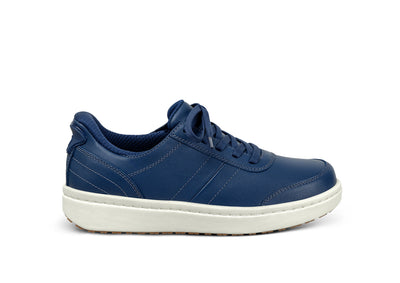 Orthofeet
Wander Hands-Free (Women's)
$129.00
Orthofeet
Wander Hands-Free (Women's)
$129.00
 Aetrex
Gabby Adjustable Quarter Strap Sandal
$99.95
Aetrex
Gabby Adjustable Quarter Strap Sandal
$99.95