
Choosing Walking Shoes for Seniors: A Fitter's Guide
Somewhere in your fifties or sixties, shoes stop being just shoes. The natural fat pads under your feet thin out, so pavement feels harder than it used to. Ankles and knees may carry some arthritis. Feet swell more by afternoon. And the stakes of a stumble go up considerably — for older adults, footwear is genuinely part of fall prevention, not just comfort. After fitting feet in Matthews for over a decade, we've learned what actually matters in a walking shoe for seniors. It's less complicated than the internet makes it, but there are a few things most lists get wrong.
What to actually look for
Grip comes first. A slip-resistant sole with a broad, stable base of contact is the foundation of everything else. If the shoe skates on a wet kitchen floor or smooth tile, nothing else about it matters much.
Cushioning, yes — but with stability. This is the one most people get backwards. A shoe that feels like a marshmallow in the store can actually be wobbly underfoot, because a very soft sole lets the foot tilt and roll. What you want is cushioning to protect those thinning fat pads, sitting on top of a firm, supportive structure. Comfortable and stable, not comfortable instead of stable.
A secure closure. The shoe should hold the heel firmly so your foot isn't sliding around inside it. Laces, straps, or a well-designed step-in system all work; a loose slip-on that gaps at the heel does not.
Lightweight construction. Heavy shoes cause fatigue and make it easier to catch a toe. Modern walking shoes can be supportive without being boat anchors.
Room for swelling. If your feet swell during the day, you need width and depth to accommodate it — wide and extra-wide widths, and extra-depth designs that leave room for an orthotic if you use one. Brands like New Balance, Brooks, Aetrex, Drew, and Orthofeet all offer generous width options, which is a big part of why we carry them in both our men's and women's collections.
The honest bit about "best of" lists
Here's the part no ranking article will tell you: the best walking shoe for seniors is the one that fits your foot. A shoe that's perfect for a narrow, high-arched foot can be actively wrong for a wide, flat one. Two people with the same shoe size can need completely different shoes. So when a list crowns one model the winner, it's really saying "this fit our tester." That may or may not mean anything for you. Fit beats brand, every time — and fit is something you determine with a measuring device and a walk across the floor, not a search engine.
If bending down is the hard part
For plenty of people, the biggest obstacle isn't choosing a shoe — it's getting it on. Arthritis in the hands, a bad back, hip replacements, balance issues: all of them turn laces into a daily fight. Hands-free shoes solve this well. Orthofeet's hands-free line uses a patented heel piece, so you tie the laces once and then just step in — no bending, no shoehorn, no crushed heel counters. The Yari, Kita, and Nira are stretch-knit sneakers; the Navigate, Wander, and Roam do the same thing in leather. We've written a full rundown of who actually benefits from hands-free shoes — and, just as honestly, who doesn't. If you can tie your shoes without a second thought, you don't need the feature and shouldn't pay for it. If you can't, it can be the difference between wearing proper shoes and shuffling around in whatever slips on.
Don't forget the slippers
Most falls happen at home, and a floppy, worn-out slipper is one of the most common hazards in the house — no grip, no structure, nothing holding it to the foot. If you wouldn't walk to the mailbox in it, think twice about wearing it all day indoors. A house shoe should have a real sole and real support. Orthofeet's Vito and Lorin slippers are built like actual shoes — structured, cushioned, with proper outsoles — while still being easy to get into. It's an unglamorous purchase that does more for safety than almost anything else on this page.
Get re-measured — really
Feet change with age. Arches settle, feet lengthen and widen, and the size you've bought since 1985 is probably not your size today. Wearing shoes a half-size too small is one of the quietest, most common problems we see, and it contributes to everything from corns to bunions and other foot conditions. If it's been more than a couple of years since anyone measured your feet, that's the first step — before any shopping.
We'll do it for free. Come by Comfort Footworks at 924 Park Center Drive, Suite 101 in Matthews for a free foot evaluation — we'll measure both feet, watch how you walk, and fit you honestly, even if that means talking you out of something. Paul Henderson, our board-certified pedorthist with 35-plus years of experience, and our certified fitter handle it personally, and if your feet need more help than a stock shoe provides, we make custom orthotics and do shoe modifications right here in-house. We're HSA/FSA eligible, and we're open Monday through Friday 10 to 6 and Saturday 10 to 4. Or call us at 704-846-0301 — a ten-minute measurement is a small price for steadier footing.
What we'd actually put you in
Roomy toe box, removable insole, no gimmicks. Screened by a pedorthist.
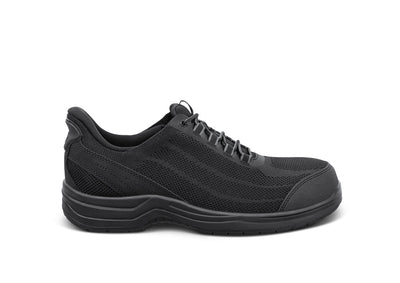 Orthofeet
Onyx Hands-Free Work Shoes (Men's)
$149.00
Orthofeet
Onyx Hands-Free Work Shoes (Men's)
$149.00
 Naot Footwear US
Naot Patricia
$159.95
Naot Footwear US
Naot Patricia
$159.95
 Aetrex
Charlotte Lace-Up Sneaker
$159.95
Aetrex
Charlotte Lace-Up Sneaker
$159.95
 Orthofeet
Yari Hands-Free (Men's)
$129.00
Orthofeet
Yari Hands-Free (Men's)
$129.00
 Taos Footwear USA
Taos Z Soul
$125.00
Taos Footwear USA
Taos Z Soul
$125.00
 Naot Footwear US
Naot Kayla Wide
$149.95
Naot Footwear US
Naot Kayla Wide
$149.95
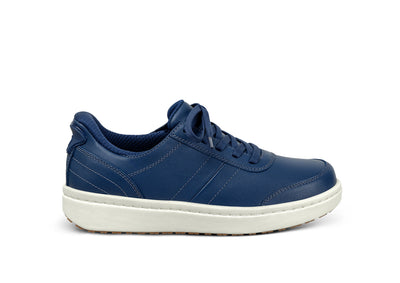 Orthofeet
Wander Hands-Free (Women's)
$129.00
Orthofeet
Wander Hands-Free (Women's)
$129.00
 Aetrex
Gabby Adjustable Quarter Strap Sandal
$99.95
Aetrex
Gabby Adjustable Quarter Strap Sandal
$99.95