
Heel Spurs vs. Plantar Fasciitis: Which One Is Actually Causing Your Heel Pain?
Heel pain is one of the most common problems we see walk through our door, and it usually arrives with a self-diagnosis attached. Half the time it's "I think I have a heel spur." The other half it's "I think it's plantar fasciitis." The two names get used almost interchangeably, and it's easy to see why — they show up in the same place, they're related to each other, and the internet blurs them together constantly.
But they're not the same thing, and the difference is more interesting than most people expect.
What Each One Actually Is
The plantar fascia is a band of fibrous tissue that runs along the bottom of your foot, from the heel toward the toes. Plantar fasciitis happens when that tissue gets overstretched and irritated. It's the classic cause of that stabbing first-step pain in the morning, and it's behind a large share of the heel pain we see.
A heel spur is something different: a bony protrusion on the calcaneus, your heel bone. It forms when the plantar fascia pulls away from the bone over time. The fascia can't grow back to reattach itself, so the bone does something odd — it grows outward toward the fascia instead. The spur is essentially your body's response to that long-term pulling.
So the two conditions are cousins. The same overstretched fascia that causes plantar fasciitis is often what leads to a spur forming in the first place.
The Part Most People Don't Know
Here's the twist: many heel spurs don't hurt at all. Plenty of people have a spur and never know it — it turns up incidentally on an X-ray taken for some other reason, and it was never causing them a single bad morning. When someone with heel pain does have a spur, the pain they're feeling usually isn't the spur itself. It's the inflamed, irritated fascia — the soft tissue, not the bone.
That means "I have a heel spur" and "my heel spur hurts" are two different claims, and only a doctor can sort them out. A spur can only be confirmed on an X-ray, and only a physician can diagnose what's actually driving your pain. We're not in the diagnosis business, and we'll be the first to tell you that. What we can tell you is that local doctors refer their patients to us for the footwear side of the equation once the diagnosis is made.
Why the Distinction Matters Less Than You'd Think
Here's the reassuring part. For conservative, non-surgical care, the treatment for heel spur pain and plantar fasciitis overlaps almost completely — because in both cases, the goal is the same: stop overstretching and irritating the fascia. The approaches that tend to help include:
- Stretching the foot and calf regularly, since tight calves pull on the whole chain
- Cushioning and cradling the heel with heel cups or pads
- Arch support — over-the-counter or custom — to keep the fascia from overstretching with every step
- Shock-absorbing, supportive shoes instead of flat, worn-out ones
- Not walking barefoot at home, where hard floors work against you
- Rolling a frozen water bottle under the foot to calm irritation
Rocker soles deserve a mention too. A rocker sole is a shoe modification that changes how the shoe rolls through a step, restricting painful bending and offloading pressure — something we build in-house and that doctors sometimes prescribe when heel and forefoot pain won't quiet down with simpler measures.
When to Stop Self-Treating and See a Doctor
Conservative care works for a lot of people, but it has limits. If your heel pain persists for weeks despite better shoes and regular stretching, if you have numbness or tingling, or if the pain simply isn't improving — see a podiatrist or your doctor. Heel pain has other causes besides these two, and you want to know what you're actually dealing with. If you have diabetes, don't wait; foot pain deserves prompt medical attention.
How We Help After the Diagnosis
Once your doctor has told you what's going on, this is where a shop like ours earns its keep. We start with a free foot evaluation — no charge, no obligation — and fit you into footwear with the support and cushioning your heels need. We stock brands built for exactly this, including Brooks, Aetrex, New Balance, Orthofeet, and Drew, and we keep dedicated collections for heel pain and plantar fasciitis if you want to browse before you visit.
If over-the-counter arch supports aren't cutting it, we make custom orthotics in-house: an evaluation, plaster positive molds of your feet (which you keep), and thermoplastic fabrication, all done in our Matthews shop by Paul Henderson, our board-certified pedorthist with over 35 years of experience. For a deeper dive on footwear specifically, our earlier post on the best shoes for plantar fasciitis is a good next read.
The honest bottom line: whether your X-ray shows a spur or not, the path to relief usually runs through the same territory — calm the fascia, support the arch, cushion the heel, and wear shoes that help instead of hurt. Get the diagnosis from your doctor, then come see us at 924 Park Center Drive, Suite 101 in Matthews, or call 704-846-0301. We're open Monday through Friday 10–6 and Saturday 10–4, and we're HSA/FSA eligible.
What we'd actually put you in
Roomy toe box, removable insole, no gimmicks. Screened by a pedorthist.
 Orthofeet
Roam Hands-Free (Women's)
$139.00
Orthofeet
Roam Hands-Free (Women's)
$139.00
 Oofos
OOahh Slide 1100 - Men's
$59.95
Oofos
OOahh Slide 1100 - Men's
$59.95
 Orthofeet
Yari Hands-Free (Men's)
$129.00
Orthofeet
Yari Hands-Free (Men's)
$129.00
 Oofos
OOriginal Sandal 1000 - Women's
$59.95
Oofos
OOriginal Sandal 1000 - Women's
$59.95
 Orthofeet
Tilos Hands-Free (Men's)
$129.00
Orthofeet
Tilos Hands-Free (Men's)
$129.00
 Aetrex
Charlotte Lace-Up Sneaker
$159.95
Aetrex
Charlotte Lace-Up Sneaker
$159.95
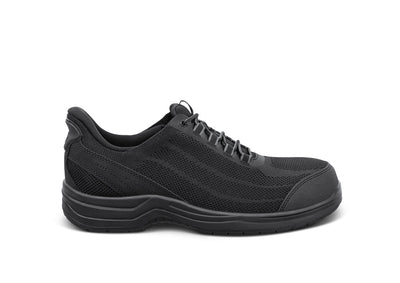 Orthofeet
Onyx Hands-Free Work Shoes (Men's)
$149.00
Orthofeet
Onyx Hands-Free Work Shoes (Men's)
$149.00
 Naot Footwear US
Naot Helm
$219.95
Naot Footwear US
Naot Helm
$219.95