
Shoes for Bunions: What Actually Helps (and What Makes Them Worse)
If you've got a bump at the base of your big toe that aches after a long day — or a shoe closet full of pairs you can't wear anymore — you're in familiar territory. Bunions are one of the most common reasons people walk through our door in Matthews, and one of the most misunderstood. So let's talk plainly about what's going on with your foot, and what footwear can and can't do about it.
What a bunion actually is
A bunion is a bony protrusion at the joint where your big toe meets your foot — the MTP joint, if you want the technical name. Over time, the big toe drifts inward toward its neighbors, and the joint at its base pushes outward. That's the bump you see and feel.
Bunions show up in women more often than men, partly because of years spent in improperly fitted shoes, and sometimes they simply run in families. Either way, the bump itself isn't the whole problem. The trouble comes from friction and pressure: a shoe that rubs against the protruding joint, or squeezes the toes together, turns a mild annoyance into daily pain. That's why footwear matters so much. Your shoes are in contact with that joint for hours every day, and they're either working with your foot or against it.
The features that genuinely help
When we fit someone with a bunion, we're looking for a handful of specific things — not a brand name, and definitely not whatever a listicle ranked number one this month.
- A wide toe box. Your toes need room to sit naturally instead of being funneled into a point. This is the single biggest factor.
- Soft, stretchable uppers. Knit and stretch materials flex over the bump instead of pressing into it. A stiff leather panel sitting right on the joint will remind you it's there with every step.
- Arch support. Good support helps distribute pressure across the whole foot rather than loading up the forefoot where the bunion lives.
- Smooth interiors and soft seams. A seam that lands directly on the bump can undo everything else the shoe gets right.
Several of the brands we carry build shoes exactly this way — you can browse our bunion-friendly collection to see what that looks like in practice, or look through our full shoe selection if you'd rather start broad.
What makes bunions worse
The short list: narrow shoes, pointed toes, and heels. A tapered toe box pushes the big toe further toward its neighbors — the exact motion that formed the bunion in the first place. Heels add insult by shifting your body weight onto the forefoot, so the sore joint carries more load and more friction.
None of this means you can never wear a dressier shoe again. It means the everyday shoes — the ones you stand, walk, and work in — should be doing the opposite of what caused the problem. And it's worth taking seriously, because untreated bunions can progress: toes can begin to overlap, and hammertoes can develop alongside them.
Accessories that earn their keep
A few small additions genuinely help. Toe spacers sit between the big toe and second toe and limit further shifting. Bunion guards and bunion socks put a soft layer between the bump and your shoe, cutting down the friction that causes most of the day-to-day soreness. These are inexpensive, and paired with the right shoes, they can make a real difference in comfort.
Depending on your foot, an orthotic can help too — supporting the arch and rebalancing pressure away from the forefoot. We carry over-the-counter orthotics and also make custom orthotics in-house, molded from a plaster cast of your foot that you get to keep.
The honest part: shoes manage bunions, they don't reverse them
We'd love to tell you the right pair of shoes will shrink that bump. It won't. Once the joint has shifted, no shoe puts it back. What good footwear does is manage the condition — reduce pain, slow the progression, and let you get on with your life comfortably. For a lot of people, that's genuinely enough.
If it isn't — if you've done the wide toe boxes, the spacers, the guards, and the pain still limits what you can do — that's the point where surgery becomes a conversation worth having with a podiatrist. Surgery is a real option after conservative measures have been given a fair try, but it's a medical decision, and it belongs with your doctor, not your shoe store. We're glad to be part of the conservative side of that equation; local doctors refer their patients to us for exactly that reason.
What a fitting looks like here
If you're not sure where your feet stand, come in. We'll measure both feet — length and width, because they're rarely identical — look at how you actually walk, and pull shoes suited to your foot rather than handing you a box and hoping. Paul Henderson, our board-certified pedorthist, has been doing this for more than 35 years, and if a shoe needs a tweak, we do modifications in-house. We've written before about what a real shoe fitting involves if you're curious what to expect.
Foot evaluations are free, no appointment needed. Find us at 924 Park Center Drive, Suite 101, Matthews — Monday through Friday 10 to 6, Saturday 10 to 4 — or call 704-846-0301. Your bunion isn't going to reverse itself, but it doesn't have to run your life either.
What we'd actually put you in
Roomy toe box, removable insole, no gimmicks. Screened by a pedorthist.
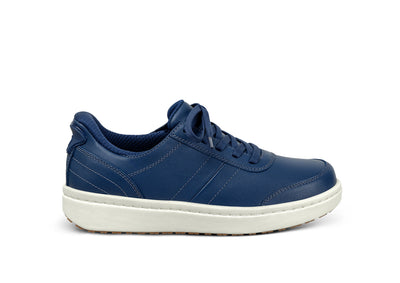 Orthofeet
Wander Hands-Free (Women's)
$129.00
Orthofeet
Wander Hands-Free (Women's)
$129.00
 Naot Footwear US
Naot Kayla Wide
$149.95
Naot Footwear US
Naot Kayla Wide
$149.95
 Orthofeet
Tilos Hands-Free (Men's)
$129.00
Orthofeet
Tilos Hands-Free (Men's)
$129.00
 Aetrex
Jillian Braided Quarter Strap Sandal
$139.95
Aetrex
Jillian Braided Quarter Strap Sandal
$139.95
 Orthofeet
Xavier Hands-Free (Men's)
$139.00
Orthofeet
Xavier Hands-Free (Men's)
$139.00
 Naot Footwear US
Naot Kirei Wide
$199.95
Naot Footwear US
Naot Kirei Wide
$199.95
 Orthofeet
Naya Hands-Free (Women's)
$119.99
Orthofeet
Naya Hands-Free (Women's)
$119.99
 Taos Footwear USA
Taos The Show
$155.00
Taos Footwear USA
Taos The Show
$155.00