Aetrex Men's Active Orthotics W/ Metatarsal Support

Paul Henderson
Clinically Screened by Paul Henderson, C.Ped
4.8 (90+ Google reviews)
$69.95

Free shipping & 60-day returns

4 interest-free payments of $17.48 with Shop Pay

FSA/HSA Eligible
Purchase options

Renews automatically · Skip or cancel anytime · Managed from your account

In stock · Ships within 1 business day from Matthews, NC
Pedorthist-Screened 60-Day Comfort Guarantee Free Shipping & Returns FSA/HSA Eligible
Paul Henderson
Paul's Note

"For forefoot pain that turns up with mileage rather than with standing. If the ball of your foot is fine, take the plain Active and keep the pad out of it."

Paul Henderson, C.Ped
Pedorthists recommend replacing orthotics every 6 months. Choose Subscribe & Save above and a fresh pair ships automatically, with 10% off every order.

Finding Your Fit

Size

  • Order your usual US shoe size. Comfort styles run true to size.
  • Between sizes, or wearing thicker socks? Choose the half size up.

Width

  • Medium (D): the standard width.
  • Wide (2E): more room in the forefoot. Pick this if your toes feel squeezed in regular shoes.
  • X-Wide (4E): the most room. Best for swelling, braces, or thick diabetic socks.

Wearing custom orthotics?

Order your usual size. The extra depth and removable insole leave room for most orthotics.

1 / 1
Men's Active Orthotics W/ Metatarsal Support
$69.95

Quick facts

Specs published by Aetrex

Arch
Medium

Cupped rearfoot, which Aetrex describe as cushioning and stabilizing the back of the foot.

Forefoot
Met pad

A raised dome behind the ball of the foot, to spread load off the metatarsal heads.

Core
Cork blend

Under a Pro-Shox layer and a moisture-wicking top cover. Firmer than memory foam.

Sizing
Whole sizes

Order your normal shoe size. If you're a half size, go up. Not trim-to-fit.

How we work out whether this is your orthotic

This is the Active with one addition: a metatarsal pad. Two questions decide it. Are you covering ground rather than standing still, which is Active versus memory foam. And does the ball of your foot hurt, which is whether you want the pad at all.

20 sec to measure both feet on the scanner in our store, free and with no obligation

We measure your arch. We don't guess it.

There's an Aetrex Albert 3D scanner in our Matthews store. You stand on it in bare feet for about twenty seconds and it measures both feet separately, to within a millimeter: length, width, girth, instep height and arch height.

Aetrex sort their orthotics on two axes, arch height and whether you have forefoot pain. This is the medium arch with a metatarsal pad, built for movement. The scan settles the first axis. Where it hurts settles the second, and that's a conversation.

The scan is free and you're under no obligation to buy anything from it.

Firmer, because it's for moving

Firmer, because it's for moving

Same arch shape as the memory foam version, different feel underfoot. A cork-blended core gives it structure that memory foam doesn't have, over a Plastazote base, with Aetrex's Pro-Shox polyurethane for shock absorption.

Memory foam is lovely to stand on and slow to come back. When you're covering ground rather than holding still, you want something that returns faster.

The dome behind the ball of your foot

The dome behind the ball of your foot

That raised bump is the metatarsal pad, and it's the only difference between this and the plain Active. Aetrex describe it as redistributing weight to relieve ball-of-foot discomfort. It sits just behind the metatarsal heads rather than under them, which is why placement matters more than softness.

Forefoot pain that shows up with mileage rather than with standing is the case this model exists for.

It has to fit the shoe, not just the foot

It has to fit the shoe, not just the foot

A quarter of an inch isn't much until you stack it on the insole already in your shoe. Take that one out first. Most sneakers and walking shoes have a removable insole and plenty of depth, which is why this line goes into athletic footwear more easily than the casual line goes into dress shoes.

  • HSA and FSA eligible
  • Free 3D foot scan in store
  • Fitted by our pedorthist

Material names, thickness and arch classification are published by Aetrex and quoted here as the manufacturer's claims. An over-the-counter orthotic is not a custom device and is not a treatment for any medical condition. If you have diabetes, neuropathy, or a diagnosed foot condition you are being treated for, talk to us or to your doctor before changing what is in your shoes.

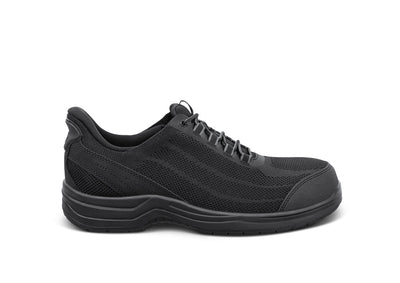
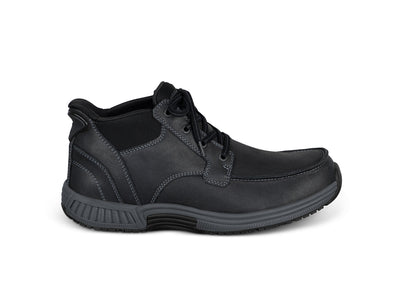
Shoes with the room to take these

An orthotic only works in a shoe deep enough to hold it. These are pairs we've checked will take a quarter inch once their own insole comes out.

Free 3D foot scan at our Matthews, NC store • free, takes twenty seconds, no obligation
4.8 90+ Google reviews

What people say about being fitted here

These are reviews of our Matthews, NC store, not of this orthotic. We'd rather show you real reviews of the fitting than invented reviews of the product.

Read all of them on Google →
  • The staff is friendly, knowledgeable and extremely helpful. The staff have helped me find shoes to alleviate my plantar fascitias pain.

    Ellie HydenGoogle review
  • I am learning to walk again & heal after a procedure to my spine. Thanks to Jim I am able to stand up straight without pain!!!

    Hope ClaryGoogle review
  • Excellent service! Pam was very helpful and informative as she guided me through the process.

    Mike GriffinGoogle review
FAQ

Frequently asked questions

The metatarsal pad, Active versus memory foam, sizing, and how to get scanned.

Do I actually need the metatarsal pad?

Only if you have pain in the ball of your foot. The pattern that points to it is burning or aching under the ball, the feeling of walking on a pebble, or numbness in the toes after a long walk or run.

If that isn't you, take the plain Active instead. Same orthotic, minus the pad. A met pad under a forefoot that didn't ask for one is noticeable, and not in a good way.

Should I get this or the Premium Memory Foam with metatarsal support?

Same arch shape, same metatarsal pad, same quarter-inch thickness. The difference is the feel and the shoe you're putting it in.

Take this if you're covering ground: walking shoes, sneakers, hiking. Cork-blended core, Pro-Shox cushioning, a moisture-wicking top cover, and it returns faster underfoot.

Take the Premium Memory Foam version if you're standing still: retail, nursing, teaching, kitchens. Memory foam, antimicrobial top cover, built for everyday casual shoes.

How do I know this is the right shape for my arch?

This one is built for a medium arch with a cupped rearfoot. If your arches are low or you roll inward when you walk, you want a posted orthotic instead, which has a wedge under the heel to control that.

You can't tell your own arch height by looking. Come in and stand on the scanner for twenty seconds, or call (704) 846-0301 and describe where it hurts and what you do all day.

What size should I order?

Your normal shoe size. Aetrex build these in whole sizes only, and there are no widths.

If you're a half size, go up rather than down. That's Aetrex's own instruction: a 9.5 takes the 10.

Can I trim them to fit?

No. Aetrex publish no trim line and no trimming instructions for this style, so it isn't an insole you cut down. That matters more here than on a plain orthotic, because trimming would move the metatarsal pad relative to your foot.

If the size is wrong, send it back within 60 days and we'll swap it.

Will these fit in my running shoes?

Almost always, and this is the easiest line to fit. Take the shoe's own insole out first, then drop these in. Most sneakers and walking shoes have a removable insole and enough depth to take a quarter inch without changing how the shoe fits.

Where it gets tight is low-volume racing flats and some minimalist shoes. If that's what you're wearing, tell us and we'll tell you honestly.

Will these help my plantar fasciitis?

A supported arch with a cupped heel is the standard first thing to try, and if your heel pain flares when you walk or run, a firmer insole in your athletic shoes is a sensible place to start.

What an over-the-counter orthotic can't do is replace a custom device made from a cast of your foot, and it isn't a treatment. If your heel pain is new, severe, or getting worse, get it looked at rather than buying an insole and hoping.

Do they need breaking in, and how long do they last?

Aetrex say no break-in is required, but with a metatarsal pad we'd ease in anyway: a few hours a day for the first week. Most people stop noticing the pad within a few days, and going straight into your longest run of the week is the way to notice it a lot.

On lifespan, Aetrex recommend replacing them every six to nine months. Mileage counts, so a runner will be at the short end of that.

Can I use FSA or HSA to pay?

Yes. Aetrex state that all their orthotics are eligible for purchase with HSA, FSA or HRA funds, and orthotics are one of the clearer cases for it.

If your plan wants documentation, call us at (704) 846-0301 and we'll get you an itemized receipt with everything an administrator normally asks for.

Can I get my feet scanned, or get advice by phone?

Yes to both. The scan is free, takes about twenty seconds, and you're under no obligation to buy anything from it. We're at 924 Park Center Dr, Ste 101, Matthews, NC 28105, open Monday to Friday 10 to 6 and Saturday 10 to 4.

Call (704) 846-0301 and you reach our fitting team, not a call center.

Not sure what you need? We'll guide you.

Answer a few quick questions and get personalized shoe recommendations from our clinical team.

  • Takes 2 minutes
  • Personalized recommendations
  • Save results for later